Bioinformatics Principal Investigator
David B. Stern
Evolutionary genetics | Bioinformatics | Ecological Genomics

Evolutionary genetics | Bioinformatics | Ecological Genomics
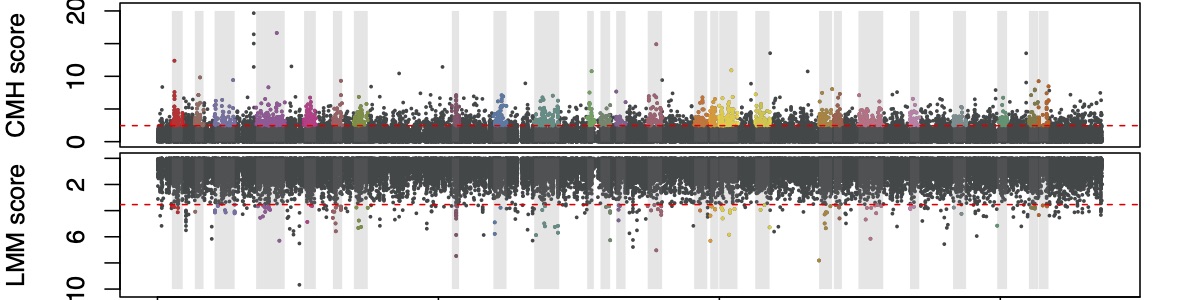
Convergent and parallel evolution is among the strongest evidence for the power of natural selection, yet the mechanisms that promote repeated evolution remain poorly understood. My research integrates evolutionary genetics, population genomics, and bioinformatics to understand how organisms adapt to novel environments. Using evolve-and-resequence experiments, comparative genomics, and computational approaches, I investigate the genomic basis of parallel adaptation in both macro- and microorganisms. This includes studying how balancing selection and epistasis promote parallel genomic responses, how cave-adapted organisms repeatedly lose complex traits like vision, how horizontal gene transfer shapes toxin diversity in harmful cyanobacteria, and developing bioinformatic tools for microbial forensics and phylogenomic analysis. My goal is to uncover generalizable mechanisms of adaptation to enable effective prediction of evolution in changing environments and ongoing disease outbreaks.
Bioinformatics Principal Investigator — National Biodefense Analysis and Countermeasures Center (NBACC)
Professorial Lecturer — George Washington University Milken Institute of Public Health
Computational Biologist — NIAID Bioinformatics and Computational Biosciences Branch (BCBB)
NIH/NHGRI Postdoctoral Fellow — University of Wisconsin-Madison, Lee Lab
PhD, Biological Sciences — George Washington University Computational Biology Institute